Recognised baselines
CIS Benchmarks, NCSC guidance and vendor security baselines, so findings stand up with auditors and certification bodies.
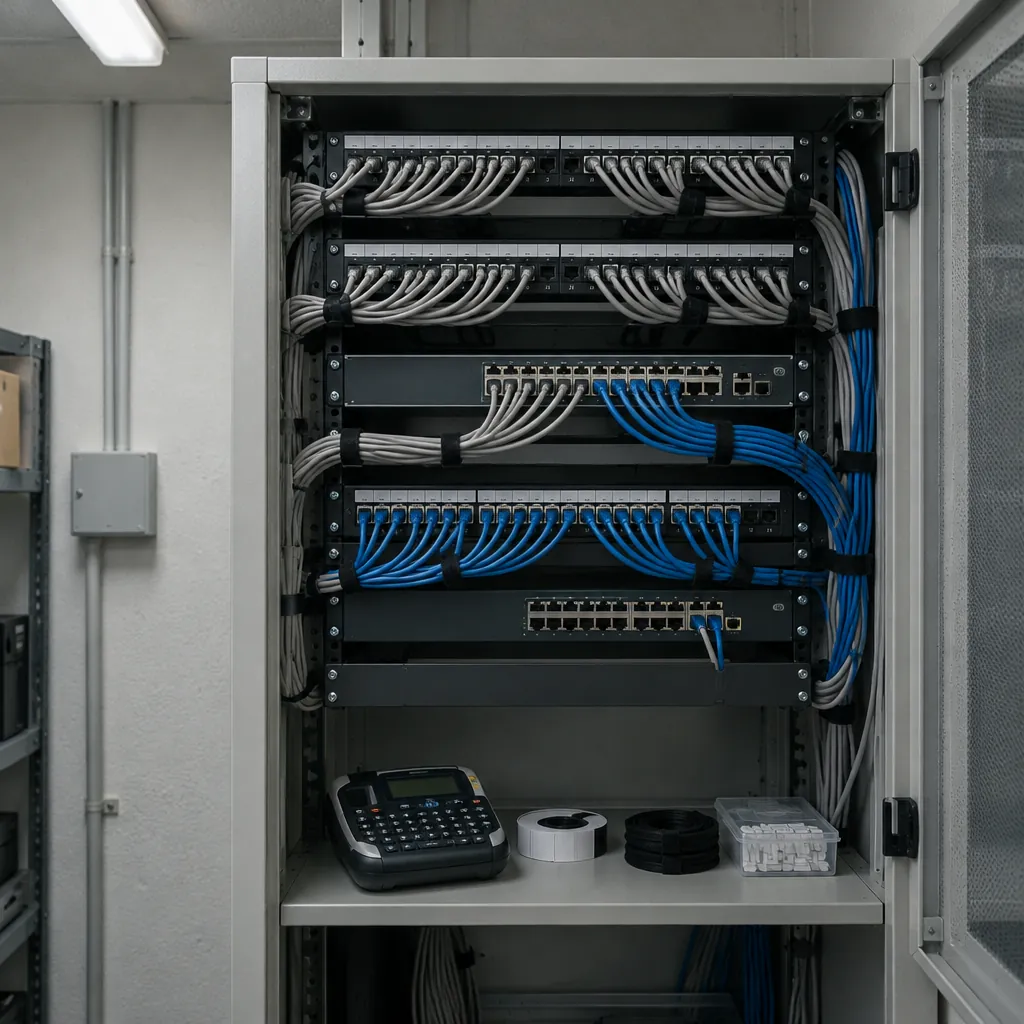
Build and configuration reviews that check servers, laptops, cloud accounts and Microsoft 365 against CIS Benchmarks and NCSC guidance, and tell you what to harden first.
Systems ship with defaults chosen to make them easy to set up. Over time, changes, exceptions and forgotten test settings add up. A build or configuration review compares what you actually run against a recognised secure baseline and shows where the gaps are.
We review operating system builds, cloud tenancies, Microsoft 365 and identity settings, network devices and the platforms that host AI tools, against CIS Benchmarks, NCSC guidance and vendor security baselines. Secure configuration is one of the five Cyber Essentials technical controls, and ISO/IEC 27001 expects configuration to be managed, so the review doubles as evidence.
GIFGIF is CREST accredited, an NCSC CHECK company and certified to ISO/IEC 27001 and Cyber Essentials Plus. Findings are ranked by how much they would help an attacker, so your team hardens what matters first rather than chasing every benchmark line.
No permission. No test.
Authorisation. Reviews require authority over the systems and accounts in scope, and suitable read access or configuration exports. A review assesses the settings examined at that point in time; it is not a guarantee of security or of certification. Remediation remains with the system owner; any re-review must be separately confirmed.
Hardening advice your team can apply. A benchmark has hundreds of settings and they do not matter equally. We review against recognised baselines, then rank each gap by how much it would help an attacker in your environment.
CIS Benchmarks, NCSC guidance and vendor security baselines, so findings stand up with auditors and certification bodies.
Our offensive security team ranks each gap by how an attacker would use it, not by benchmark score alone.
Recommendations are written for the Group Policy, Intune, cloud or configuration management tools your team already uses.
The work is defined by the systems and applications agreed for this assessment. These descriptions do not expand that scope.
Check a standard image or live system against a hardened baseline.
We review Windows, macOS and Linux builds for patching, local administrator rights, disk encryption, credential protection, logging, unnecessary services and application control. A review can cover a gold image before rollout or a sample of live systems to show how far the estate has drifted.
Each gap is linked to the baseline control it fails and to a practical fix, such as a Group Policy, Intune or configuration management change.
Review the tenancy settings that decide who can reach what.
A misconfigured cloud or Microsoft 365 tenancy can expose data without anyone breaking in. Within your authority, we review conditional access, multi-factor authentication coverage, admin roles, external sharing, mailbox rules, storage permissions and logging across Microsoft 365, Azure, AWS and Google Cloud.
This is also the groundwork for safe AI adoption: an assistant such as Copilot can surface anything the underlying permissions allow.
Check the devices that separate your networks.
Firewall rule bases, remote access gateways, switches and wireless controllers are reviewed for overly broad rules, weak management access, outdated firmware and missing logging.
Where a full penetration test is not needed, a configuration review gives a lower-disruption view of the same devices.
Set safe defaults before an agent goes live.
AI agents inherit the identities, API keys and network access they are given. We review service accounts, secret storage, tool permissions, MCP server exposure, logging and human approval steps, and recommend least-privilege settings that limit the damage if the model is manipulated.
This pairs with our AI and agent security testing, which tests how the agent behaves under attack.
Written authorisation, identified targets and agreed rules of engagement are prerequisites. Activity stays within that scope.
From the brief to useful security findings. We agree the objective, written authority and rules of engagement before assessing the named systems and explaining the results.
We clarify the decision, parties or systems in scope, intended use and lawful purpose of the work.
Written permission, identified targets, exclusions and rules of engagement are established before testing.
Information is considered for source, date, relevance and corroboration; uncertainty is not converted into a conclusion.
The account explains what was observed, what it may mean, what remains unresolved and the limits of the work.
When a configuration review is commonly commissioned.
An IT team may want a gold image checked before it is deployed to hundreds of devices.
An organisation preparing for certification may want an independent check of its secure configuration before the assessor arrives.
Findings that trace back to weak settings may prompt a wider review to see how far the same problem runs.
A business enabling Copilot or deploying agents may want its permissions and tenancy settings tightened first.
Short answers to the questions we are asked most about this work.
A review of how a system is set up, compared with a recognised secure baseline. It finds weak settings, unnecessary services and excessive permissions an attacker could use, and sets out how to fix them.
Reducing what an attacker can use by removing unneeded software and services, tightening permissions, enforcing encryption and logging, and changing insecure defaults. A configuration review tells you where hardening is needed.
Consensus-based secure configuration guides published by the Center for Internet Security for operating systems, cloud platforms, Microsoft 365, network devices and applications. They are widely used as a hardening baseline.
A penetration test tries to exploit weaknesses from an attacker’s position. A configuration review inspects the settings directly with authorised access, so it finds issues a test may not reach and causes less disruption. Many organisations use both.
Yes. Secure configuration is one of the five Cyber Essentials technical controls, and ISO/IEC 27001 expects configuration to be managed. A review gives you evidence and a remediation list before assessment.
Yes. Copilot can surface anything a user’s permissions allow, so tightening sharing, access and sensitivity settings first is one of the most effective ways to reduce AI data leakage.