ISO/IEC 17025 accredited
Methods, tools and examiners are covered by accreditation that courts and the Forensic Science Regulator recognise.
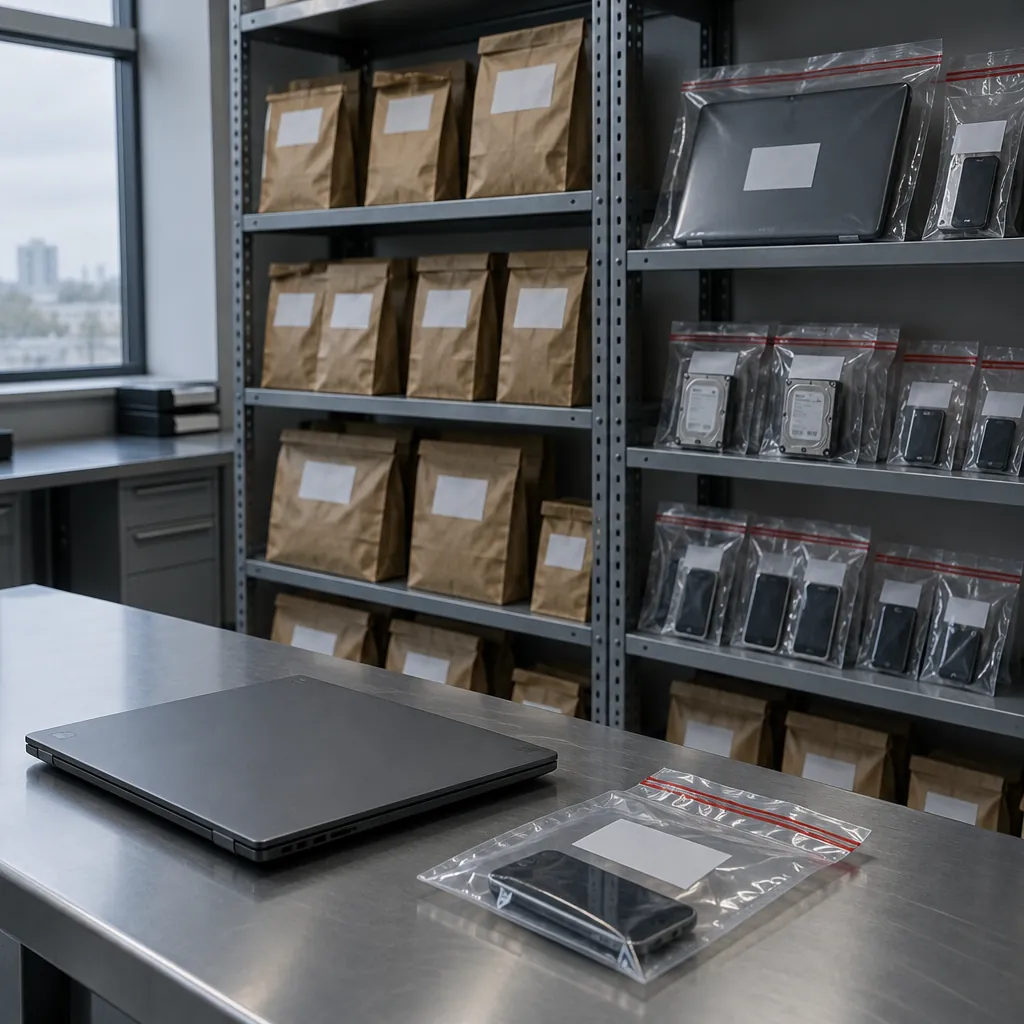
ISO/IEC 17025 accredited forensic examination of computers, servers, email and cloud accounts, reported to the standard courts, regulators and tribunals expect.
Most disputes and investigations now turn on digital material: an email that was sent or deleted, files copied before someone left, a document edited after the event, or activity on a system at a particular time. That material is easy to alter and easy to challenge, so how it is collected matters as much as what it shows.
GIFGIF is accredited to ISO/IEC 17025 for digital forensics. The Forensic Science Regulator’s statutory Code of Practice expects digital forensic work in criminal cases to be carried out under that accreditation, and it gives the same assurance in civil, regulatory and employment matters. Devices and data are acquired with a documented chain of custody, following the established UK principles for handling digital evidence.
We act for corporates, law firms, criminal defence teams, law enforcement and prosecutors. Findings are reported clearly for the people who need to act on them, and our examiners can provide expert evidence under CPR Part 35 or the Criminal Procedure Rules when a matter goes to court.
Suspicion directs the inquiry. Evidence determines what can be said.
Our standard. Examination requires the device owner’s consent or appropriate legal authority. Findings depend on the data available and are reported with their limits. Recovery of deleted data cannot be guaranteed, and conclusions remain for the court, tribunal or client to draw.
Accredited work that survives scrutiny. Digital evidence is only useful if the other side cannot pick it apart. Our examinations are carried out under ISO/IEC 17025 accreditation, with every step documented and repeatable.
Methods, tools and examiners are covered by accreditation that courts and the Forensic Science Regulator recognise.
Every device and dataset is tracked from collection to report, so its integrity can be shown at any point.
Reports say what the evidence shows and what it cannot show, which is what makes them credible.
Suspicions start an inquiry. Sourced observations, analysis and open questions remain distinct throughout.
Forensic imaging and analysis of Windows, macOS and Linux systems, servers and removable media.
A forensic image captures a complete, verified copy of the storage so the original is preserved and analysis can be repeated. Examination can establish user activity, file creation and deletion, USB and external drive use, internet history and the timeline of events around an incident.
Where data has been deleted, overwritten or hidden, we report what can and cannot be recovered and how confident the findings are. Recovery depends on the device, the storage technology and what has happened since, so we explain the limits rather than overstate them.
Collect and analyse evidence held in Microsoft 365, Google Workspace and other cloud services.
Much of the relevant evidence now sits in mailboxes, shared drives, messaging platforms and audit logs rather than on a single device. With the account owner’s authority, we collect this material in a forensically sound way and preserve the metadata that shows who did what and when.
Analysis can cover email authenticity and tampering, file sharing and downloads, sign-in activity and the movement of data outside the organisation.
Reports written for the forum they are going to, from internal disciplinary panels to the Crown Court.
Every report sets out what was examined, how, what was found and what the findings can and cannot support. Technical detail sits in appendices so the main findings are readable by lawyers, HR and senior decision-makers.
Where an independent expert is needed, our examiners prepare reports that comply with CPR Part 35 or Part 19 of the Criminal Procedure Rules and can give evidence in court.
Follow the question through the evidence.
From the question to useful findings. We agree the question, identify relevant sources and organise the findings around the decision the work should inform.
We clarify the decision, parties or systems in scope, intended use and lawful purpose of the work.
Relevant time periods, source types, confidentiality considerations and exclusions are agreed before research begins.
Information is considered for source, date, relevance and corroboration; uncertainty is not converted into a conclusion.
The account explains what was observed, what it may mean, what remains unresolved and the limits of the work.
Matters that commonly need a forensic examination. Examples to help frame an enquiry; these are not case histories.
An employer may need to know whether confidential files or client data were copied, emailed or uploaded before someone left.
A legal team may need to establish whether a document was created, altered or sent when one party says it was.
A defence team may need an independent examination of devices or the prosecution’s digital evidence before trial.