Broad device coverage
iOS and Android phones, tablets, wearables, smart home and IoT devices, vehicles and drones.
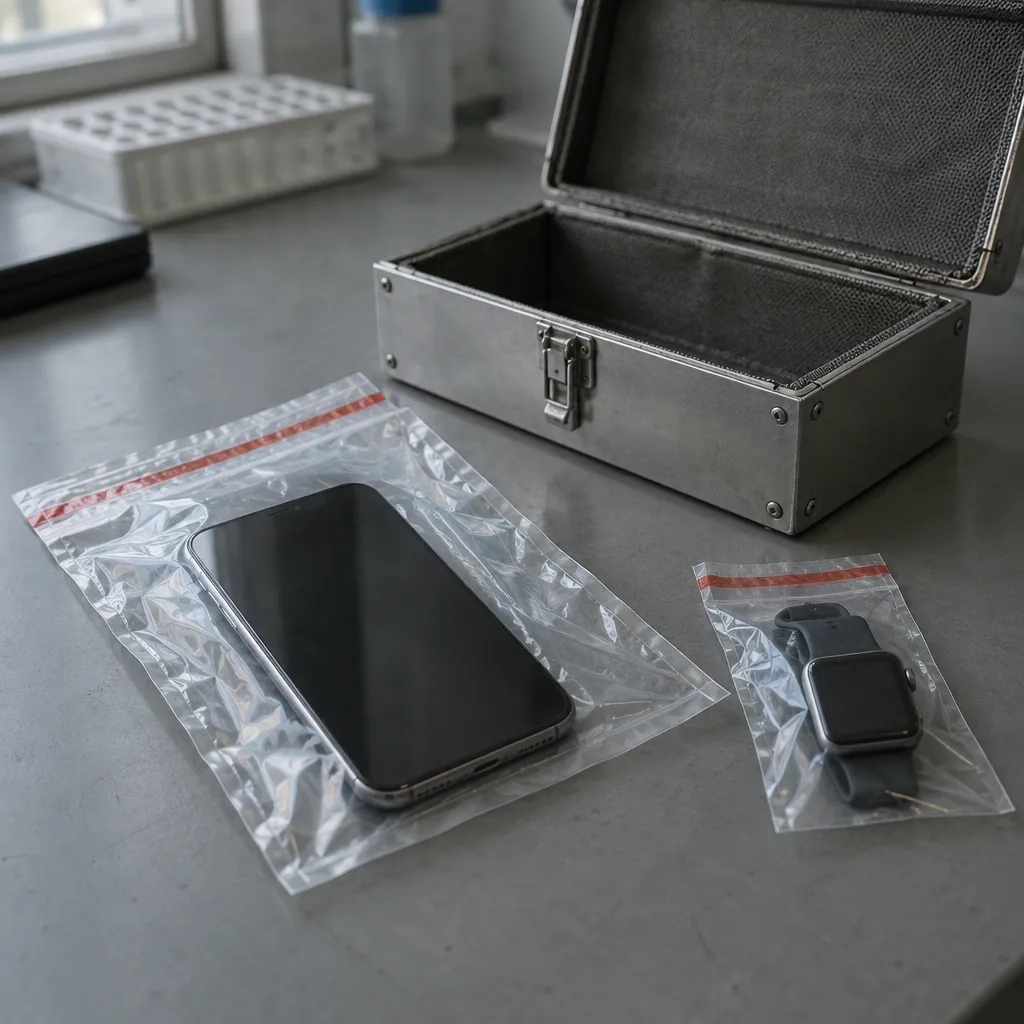
Forensic extraction and analysis of mobile phones, tablets, wearables, smart home technology and vehicles, carried out under ISO/IEC 17025 accreditation.
Phones record messages, calls, locations, photographs, app activity and the timing of almost everything their owner does. Smart watches, fitness trackers, smart speakers, doorbells, home hubs and modern vehicles add another layer: they log movement, presence and activity that the user may not even know is being kept.
We extract and analyse data from iOS and Android devices and a wide range of connected technology. The level of extraction possible depends on the make, model, operating system and security of each device, and we explain what was obtained and how before any findings are relied on.
Work is carried out under ISO/IEC 17025 accreditation with full continuity records, for corporate and civil matters, criminal defence, law enforcement and prosecution. Our examiners can explain the findings in plain terms and give expert evidence when required.
Suspicion directs the inquiry. Evidence determines what can be said.
Our standard. Devices are examined only with the owner’s consent or appropriate legal authority. The data that can be extracted depends on the device, its operating system and its security, and recovery of deleted material cannot be guaranteed. Findings are reported with their limits.
From phones to the smart devices around them. Evidence rarely sits on one device. We bring together phones, wearables, smart home technology, vehicles and the cloud accounts behind them into one coherent account.
iOS and Android phones, tablets, wearables, smart home and IoT devices, vehicles and drones.
Messages, locations and app activity are combined so the sequence of events is clear and sourced.
We explain what each device allowed us to obtain, so nobody relies on data that was never available.
Suspicions start an inquiry. Sourced observations, analysis and open questions remain distinct throughout.
Extraction and analysis of iOS and Android phones and tablets.
Depending on the device and its security, extraction may be logical, full file system or a physical image. Analysis can cover messages including WhatsApp, Signal and other apps, call logs, contacts, photographs and their metadata, location history, browser activity and deleted items where they remain recoverable.
We build timelines that bring messages, locations and app activity together, so the sequence of events is clear and each point can be traced back to its source.
Evidence from the connected devices people live and work with.
Smart speakers, video doorbells, security cameras, thermostats, hubs, smart watches and fitness trackers can record activity, presence and movement. Much of this data is held in the device, the paired phone and the manufacturer’s cloud service, so we identify where the evidence sits before deciding how to collect it.
This work is often decisive in establishing who was where and when, or whether an account of events fits the data the devices recorded.
Data from infotainment, telematics and unmanned aircraft.
Modern vehicles store paired phones, call logs, contacts, navigation history and event data. Drones record flight logs, positions and media. Where these devices are relevant, we extract and interpret the data alongside the rest of the evidence.
As with every device type, what can be recovered varies by manufacturer and model, and the report states this clearly.
Follow the question through the evidence.
From the question to useful findings. We agree the question, identify relevant sources and organise the findings around the decision the work should inform.
We clarify the decision, parties or systems in scope, intended use and lawful purpose of the work.
Relevant time periods, source types, confidentiality considerations and exclusions are agreed before research begins.
Information is considered for source, date, relevance and corroboration; uncertainty is not converted into a conclusion.
The account explains what was observed, what it may mean, what remains unresolved and the limits of the work.
Where device evidence often matters. Examples to help frame an enquiry; these are not case histories.
A legal team may need a forensically sound record of messages and their timing, including any that have been deleted.
Defence or prosecution may need to test whether device data supports an account of where someone was and what they were doing.
An employer may need to establish what a company phone or tablet was used for during a period under investigation.